Product Catalog | Agrochemicals
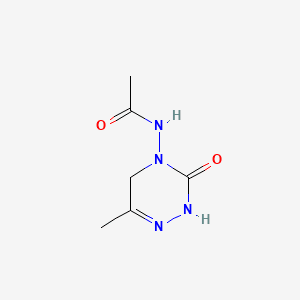
4-ACETYLAMINO-6-METHYL-3-OXO- 2,3,4,5-TETRAHYDRO-1,2,4-TRIAZINE
4-Acetylamino-6-methyl-3-oxo-2,3,4,5-tetrahydro-1,2,4-triazine is a crucial intermediate in the synthesis of selective insecticides. It belongs to the triazine family and plays a fundamental role in the formulation of crop protection agents, particularly in controlling sucking pests.
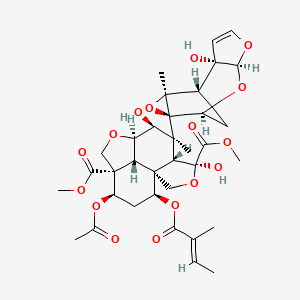
Azadirachtin
Azadirachtin is a naturally occurring tetranortriterpenoid derived from neem tree (Azadirachta indica) seeds. It acts as an insect growth regulator (IGR), antifeedant, and repellent, disrupting molting and development in insect larvae. It is used as a biopesticide in organic farming, providing broad-spectrum insect control with minimal environmental impact. It has other Chemical name as (1R,2S,3S,6R,7S,8R,10R,11S,12S,19R)-10-acetoxy-3,7,12,14,15,17,20-heptahydroxy-2,11-dimethoxy-4,16-dioxo-6,7,8,10,12,14,15,16,17,18,19,20-dodecahydro-1H-3,19-epoxyazadirachtin.
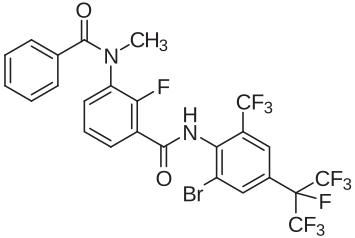
Broflanilide
Broflanilide is a novel meta-diamide. It functions as a GABA-gated chloride channel allosteric modulator, providing a unique mode of action against various insect pests. Broflanilide, with the CAS number 1207727-04-5, is a synthetic insecticide used to control chewing pests like caterpillars and beetles, it is considered a meta-diamide insecticide with a novel mode of action. Acts as a potent antagonist at the insect resistant-to-dieldrin (RDL) GABA receptor, disrupting the insect's nervous system.
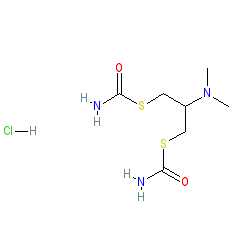
Cartap Hydrochloride Technical 98%
Cartap Hydrochloride is a synthetic insecticide classified as a nereistoxin analog, primarily used in agriculture for controlling a variety of insect pests. It is effective against chewing and sucking pests, including caterpillars and leafhoppers, by disrupting their nervous system, leading to paralysis and death. The technical grade (98% purity) is utilized in formulating various pesticide products.
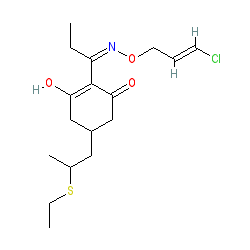
Clethodim
Clethodim is a selective, systemic herbicide belonging to the cyclohexanedione family, primarily used for post-emergence control of annual and perennial grass weeds in various broadleaf crops. It inhibits acetyl-coenzyme A carboxylase (ACCase), an essential enzyme in fatty acid synthesis, leading to the cessation of cell growth and eventual plant death. Clethodim is effective against a wide range of grass species, including those resistant to other herbicides.
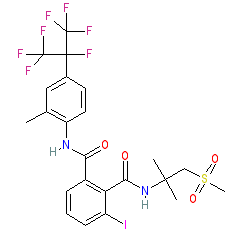
Flubendiamide
Flubendiamide is a white crystalline powder classified under the phthalic acid diamide class of insecticides. It acts by modulating the ryanodine receptors in insect muscle cells, causing uncontrolled calcium release, muscle paralysis, and death. It offers effective protection against a broad spectrum of lepidopteran pests, making it a vital tool in crop protection strategies.
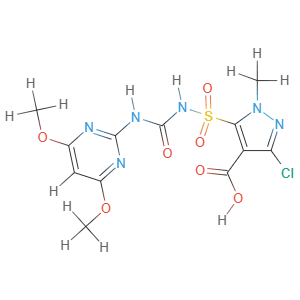
Halosulfuron
Halosulfuron is a systemic sulfonylurea herbicide used for selective post-emergence control of broadleaf weeds and sedges in various crops, including maize, sugarcane, rice, sorghum, nuts, and turf. It functions as an acetolactate synthase (ALS) inhibitor, disrupting the biosynthesis of essential amino acids, thereby inhibiting cell division and plant growth. Other identifiers are UNII-8WU8U5S0UR and KEGG-C18442
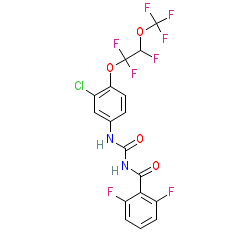
Novaluron Technical
Novaluron is a benzoylurea insecticide that acts as an insect growth regulator (IGR) by inhibiting chitin synthesis, essential for insect exoskeleton development. It is effective against various insect pests, including those affecting apples, potatoes, brassicas, ornamentals, and cotton. Due to its specific mode of action, it has a low impact on non-target organisms and is widely used in integrated pest management (IPM) programs.
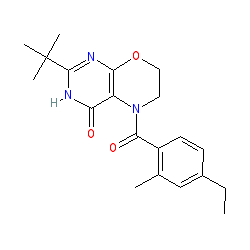
Pinoxaden
Pinoxaden is a selective post-emergence herbicide belonging to the phenylpyrazole class, primarily used for controlling annual grass weeds in cereal crops. It functions by inhibiting the enzyme acetyl-CoA carboxylase (ACCase), which is essential for fatty acid synthesis in grasses, leading to effective weed control.
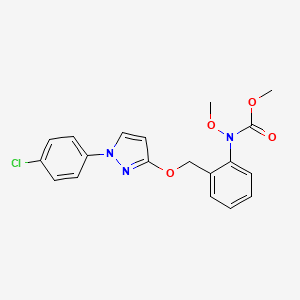
Pyraclostrobin Technical
Pyraclostrobin is a broad-spectrum fungicide belonging to the strobilurin class, known for its preventive and curative properties. It inhibits mitochondrial respiration in fungi, effectively controlling a wide range of plant pathogens. Pyraclostrobin is widely used in agriculture to protect high-value crops, ensuring enhanced yield and quality.
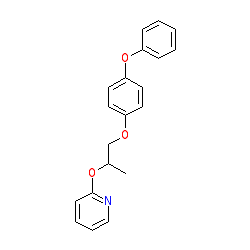
Pyriproxyfen Technical
Pyriproxyfen is a pyridine-based insecticide that functions as a juvenile hormone analog, disrupting the growth and development of insects. It is effective against a variety of pests, including whiteflies, fleas, and mosquitoes, by inhibiting the maturation of larvae into reproductive adults. Introduced in 1996, it has been widely used in agriculture to protect crops and in public health initiatives to control disease vectors.
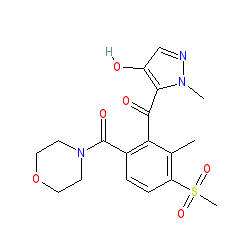
Topramezone
Topramezone is a selective post-emergence herbicide belonging to the pyrazolone class, primarily used for controlling broadleaf and grass weeds in corn and other crops. It inhibits the enzyme 4-hydroxyphenylpyruvate dioxygenase (HPPD), leading to the disruption of carotenoid biosynthesis in target plants. This results in bleaching and subsequent necrosis of the weeds. Other identifier- UNII: W4934JAQ65